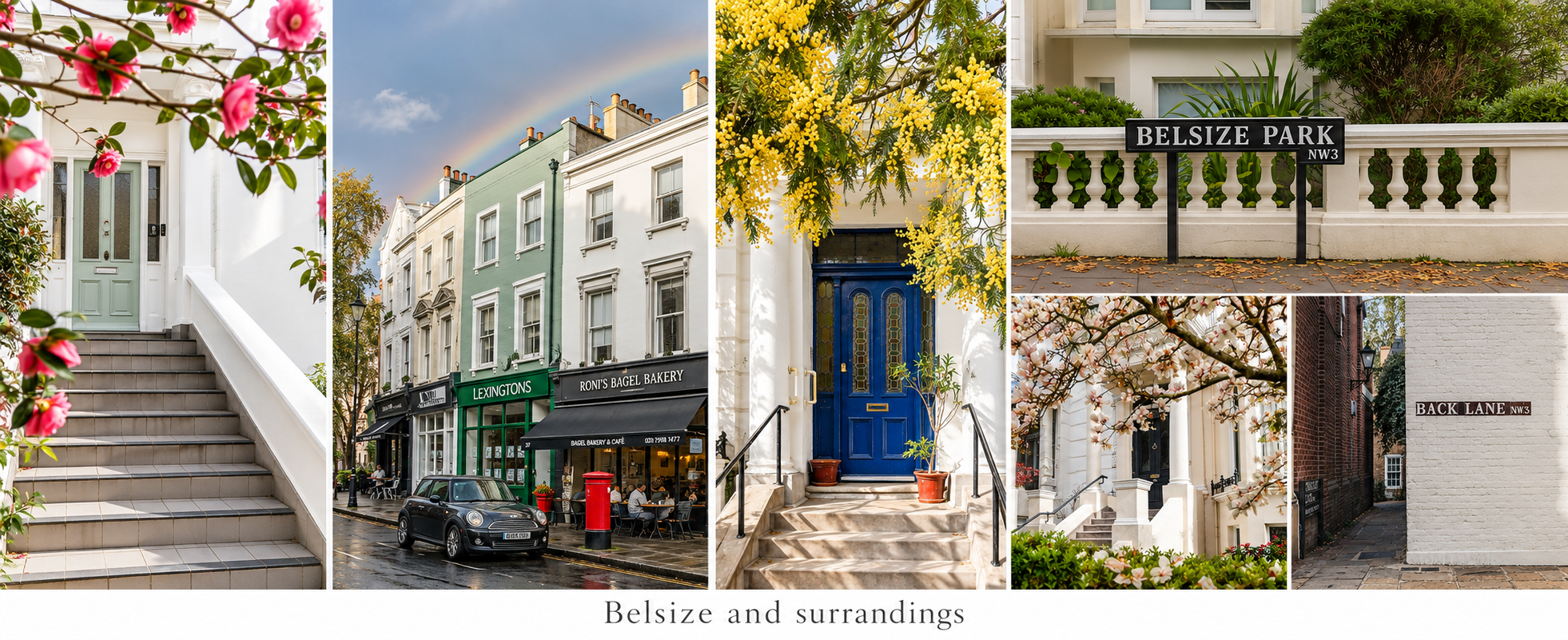
Behind the elegant façades and leafy streets of North West London lies a world of poets, painters, eccentric characters, architectural experiments and extraordinary stories. Welcome to Belsize Park and Hampstead, where the most interesting things are often hiding in plain sight. There is something wonderfully understated about Belsize Park. Unlike Hampstead, with its literary mythology, or Primrose Hill, with its postcard views and fashionable reputation, Belsize has never been particularly interested in drawing attention to itself. And yet, look a little closer.
Behind its white stucco porticoes are houses that have witnessed two centuries of London life. A discreet modernist building on Lawn Road helped redefine the way people live. Behind the gates of an unassuming side street, some of Britain’s most influential artists once worked. Just up the hill, a young poet fell in love and wrote some of the most celebrated verses in the English language. Elsewhere, a local woman’s portrait survives on a village wall, jazz musicians perform beneath an old Hampstead pub, and remarkable architectural details reveal themselves to anyone curious enough to look up. Nestled between the leafy calm of Hampstead Heath and the vibrant energy of Camden, Belsize Park and the wider NW3 area offer a distinctive way of life, where village charm meets cosmopolitan spirit. This is a neighbourhood that rewards curiosity. Its pleasures are found not only in its handsome houses and independent cafés, but in the stories behind them.
When Belsize Was London’s playground
Long before Belsize Park acquired its respectable Victorian terraces, the neighbourhood had a rather more scandalous reputation. In the early eighteenth century, Belsize House stood within extensive grounds around what is now Belsize Park and Belsize Square. In 1720, its gardens opened as a fashionable pleasure resort, attracting Londoners seeking entertainment beyond the crowded city. There was music, dancing, elaborate dinners, hunting and gambling. The Prince and Princess of Wales visited in 1721, although the establishment’s growing reputation for excess soon attracted the attention of the authorities. By 1722, magistrates had intervened amid concerns about unruly behaviour and unlawful gaming. It is an entertaining thought when walking along the area’s dignified residential streets today: some of London’s most elegant addresses occupy land once associated with rather riotous parties.
The Houses that tell their own stories
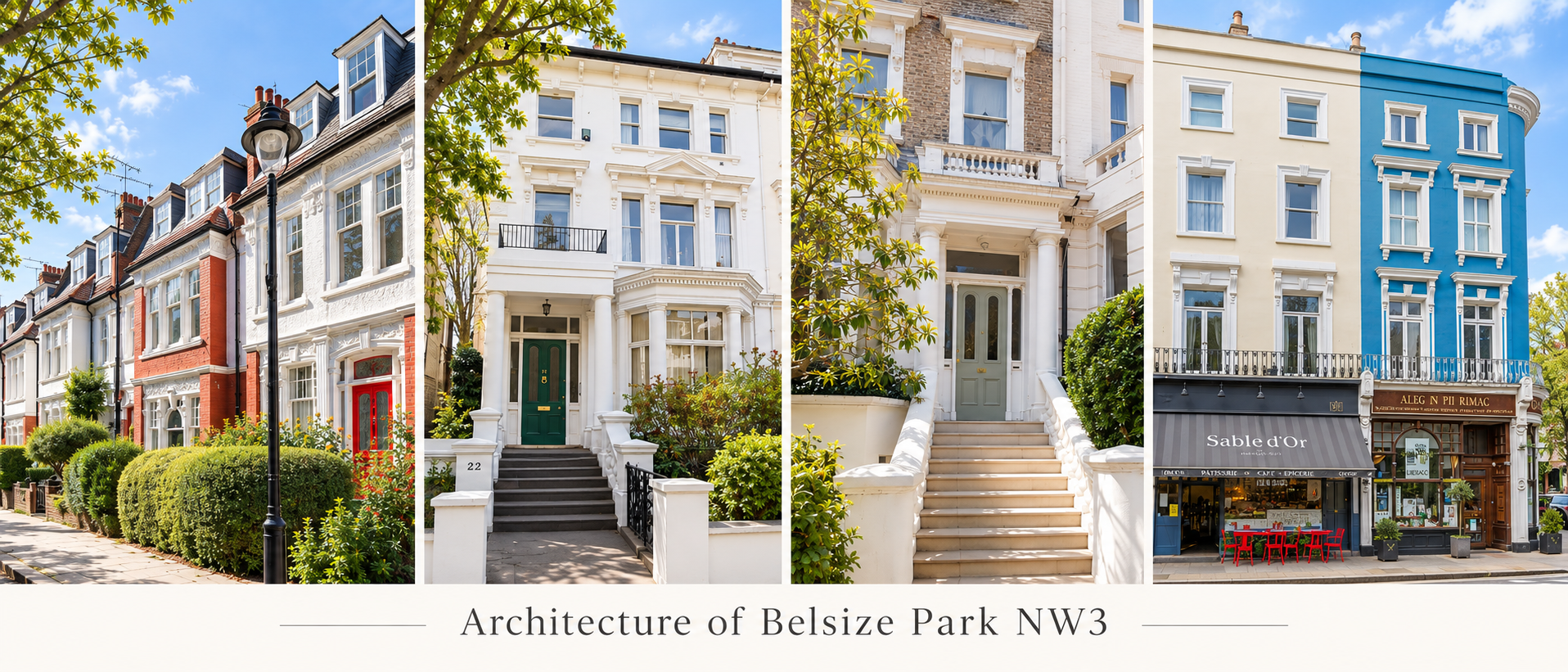
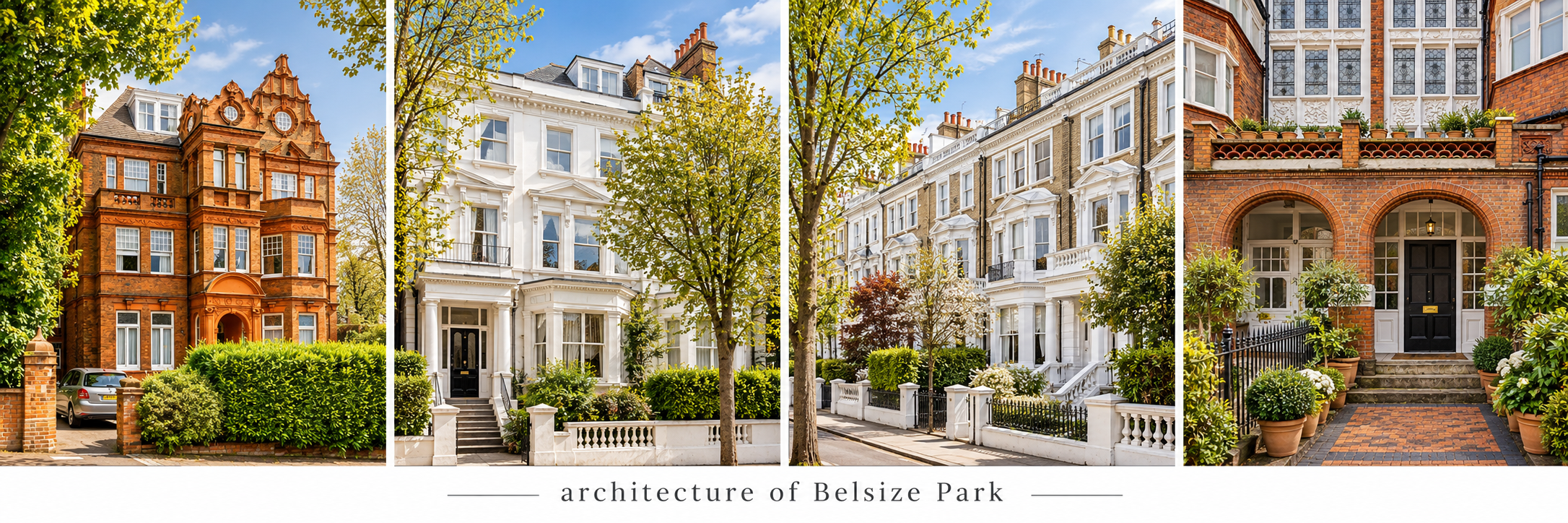
Architecture is perhaps NW3’s most compelling open-air collection. The grand Italianate villas of Belsize Square and Belsize Park Gardens reflect the ambitions of the Victorian developers who transformed what had once been country estates into a fashionable residential suburb. Builder Daniel Tidey was particularly influential. From the 1850s, he created imposing stucco houses with elaborate entrances, tall windows, generous reception rooms and beautifully detailed interiors. Their theatrical elegance was entirely intentional. These were homes designed to announce success. Walk towards Eton Avenue, Lyndhurst Gardens and Wedderburn Road, however, and the architectural language changes. Here, the red-brick houses associated with developer William Willett and his contemporaries introduced a more individual, picturesque style, with steep roofs, prominent chimneys, decorative brickwork and intricate detailing.
The pleasure of walking through NW3 is noticing how these contrasting architectural styles coexist. Italianate grandeur gives way to Queen Anne revival, Gothic churches stand close to modernist apartments, and modest mews houses occupy the spaces between. There is no single architectural identity here. That is precisely what makes the neighbourhood so interesting.
Tasker Road: where British modernism took shape
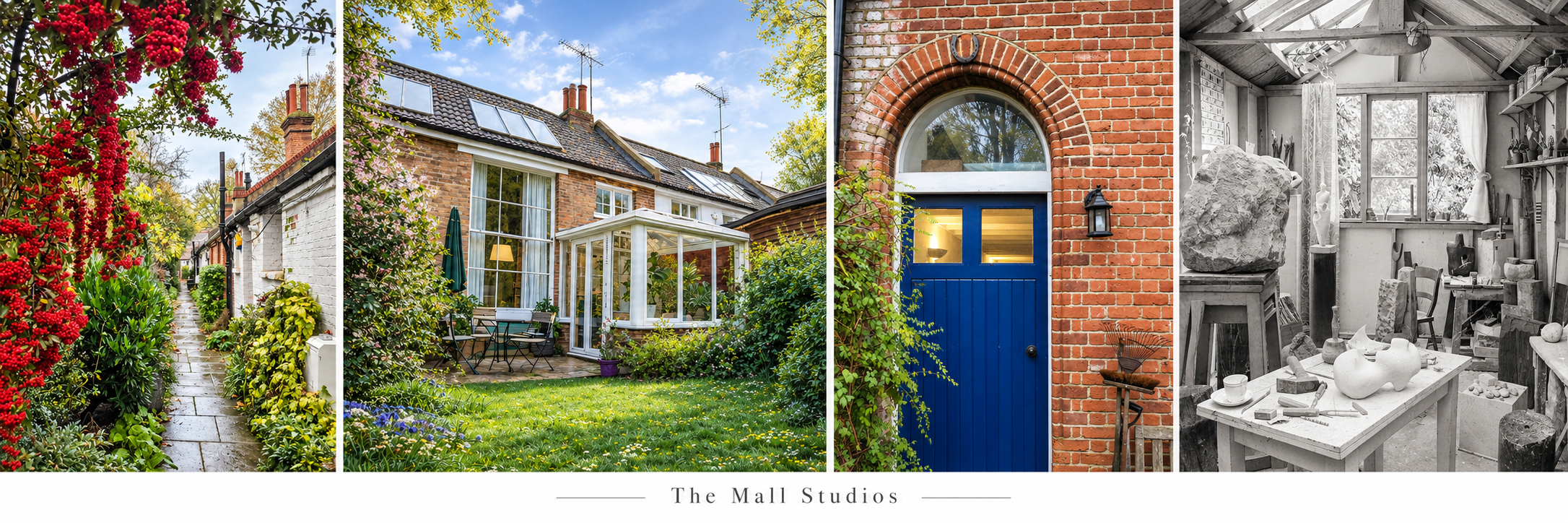
Tucked behind private gates on Tasker Road, close to England’s Lane, lies one of Belsize Park’s most remarkable architectural secrets. The Mall Studios were built in 1872 as purpose-designed artists’ studios, with soaring ceilings and generous north-facing windows to provide the steady, diffused daylight preferred by painters. From the street, the buildings appear surprisingly modest. Behind their façades, however, are extraordinary spaces that became associated with one of the most influential artistic communities in twentieth-century Britain. During the 1930s, the wider Hampstead modernist circle included Barbara Hepworth, Ben Nicholson, Henry Moore and Piet Mondrian, whose artistic lives and collaborations helped transform British modern art. Hepworth and Nicholson were particularly closely connected with the Mall Studios, while Moore and Mondrian worked nearby. It is difficult to imagine a more compelling contrast: revolutionary artistic experimentation taking place behind the discreet gates of a respectable London neighbourhood.
The studios also offer a fascinating example of how architecture can retain its original purpose across generations. Their extraordinary proportions, originally conceived for the practical needs of artists, remain among their most distinctive features. Few passers-by would suspect that such an important chapter in Britain’s artistic history unfolded just metres away.
The Isokon: A radical experiment behind the trees
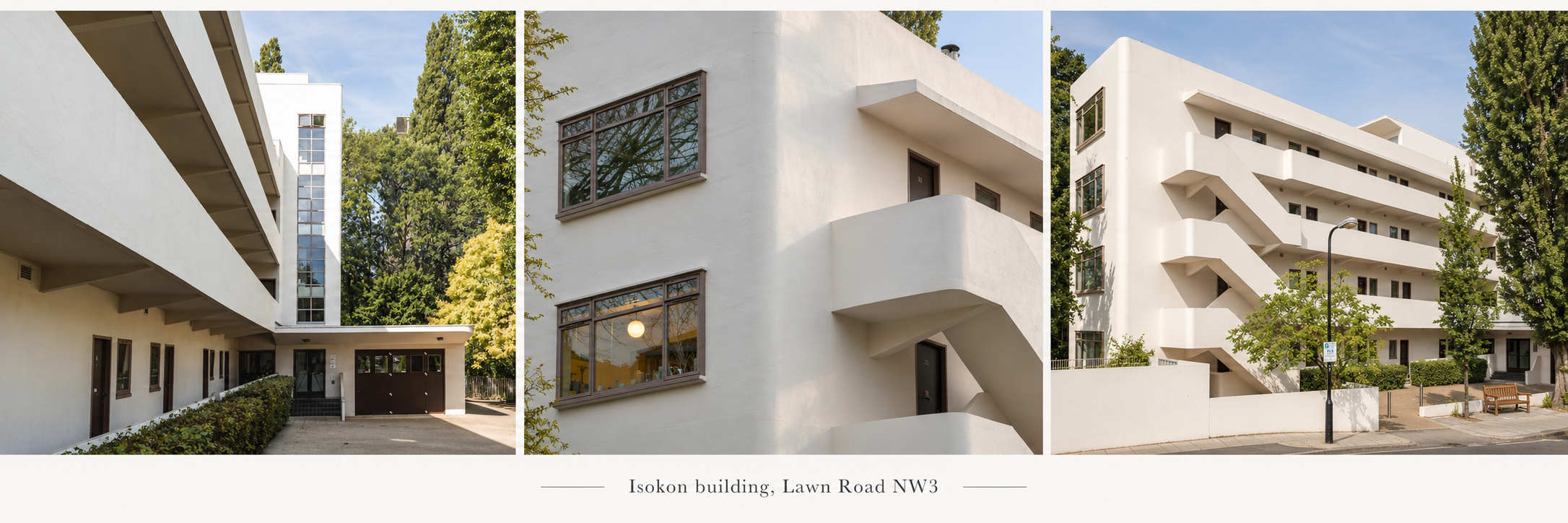
Few London buildings have such an extraordinary collection of former residents as the Isokon Flats on Lawn Road. Completed in 1934 and designed by Wells Coates for Jack and Molly Pritchard, this uncompromisingly modern building represented an entirely different vision of domestic life. Its small, meticulously planned apartments were designed for a new generation of urban residents who valued efficiency, independence and good design over the conventions of the Victorian home.
The Isokon attracted an extraordinary circle of artists and intellectuals. Among its residents were Bauhaus pioneers Walter Gropius and Marcel Breuer, as well as novelist Agatha Christie. The building became closely associated with the European modernist movement and with artists and designers who found refuge in Britain during the turbulent 1930s. Even more remarkably, its history intersects with the world of international espionage, giving its otherwise austere concrete walls a rather unexpected air of intrigue.
Today, the Isokon Gallery occupies the former garage, offering visitors a fascinating introduction to the building and the ideas behind it. For anyone interested in architecture, it is essential viewing. More than ninety years after its completion, it still feels strikingly contemporary.
A house for a poet: Keats Grove
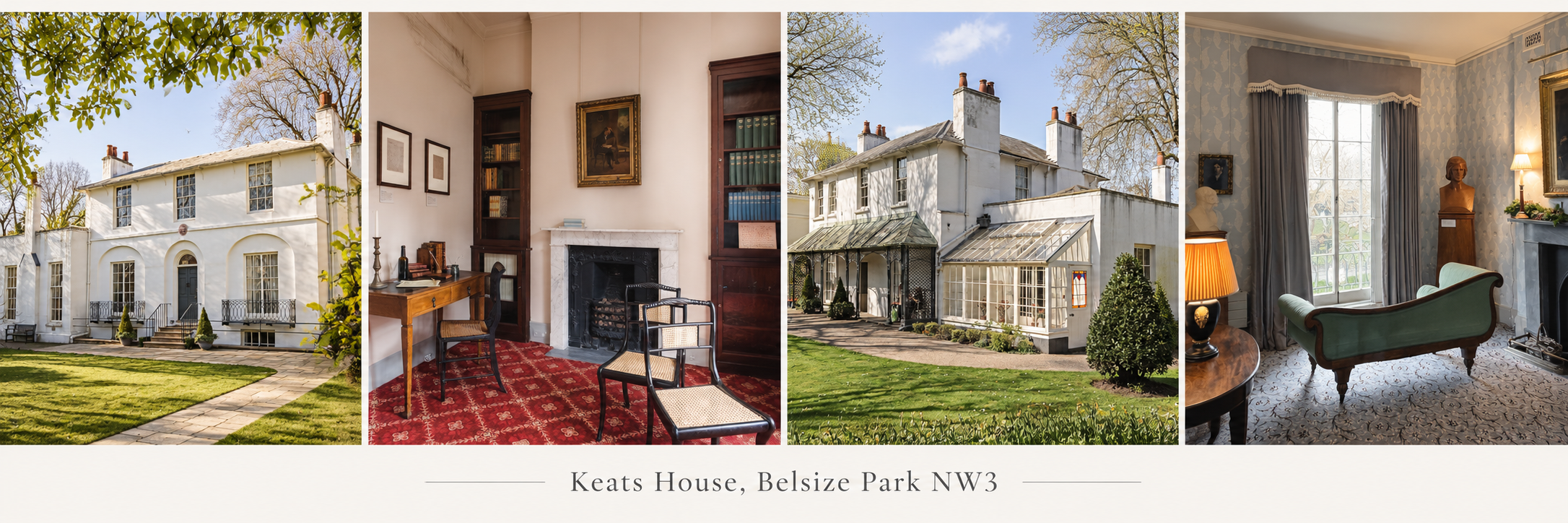
A short walk towards Hampstead Heath brings you to one of London’s most intimate literary landmarks. Keats House, originally known as Wentworth Place, is a modest Regency villa that appears almost deliberately unremarkable. Its significance lies not in architectural grandeur, but in what happened inside.
John Keats lived here from 1818 to 1820, during an astonishingly productive period of his short life. Here he wrote some of his greatest poetry and fell in love with Fanny Brawne, who lived next door. What makes the house so affecting is its domestic scale. This is not the grand residence of an established literary celebrity, but the home of a young man whose extraordinary talent was accompanied by financial insecurity, illness and unfulfilled ambitions. Today, the house preserves something of that intimacy. Its rooms and garden offer a rare opportunity to encounter literary history in an almost everyday setting. Of all the celebrated addresses in NW3, it is perhaps one of the most moving.
David S. Percy and the Remarkable Homes of NW3
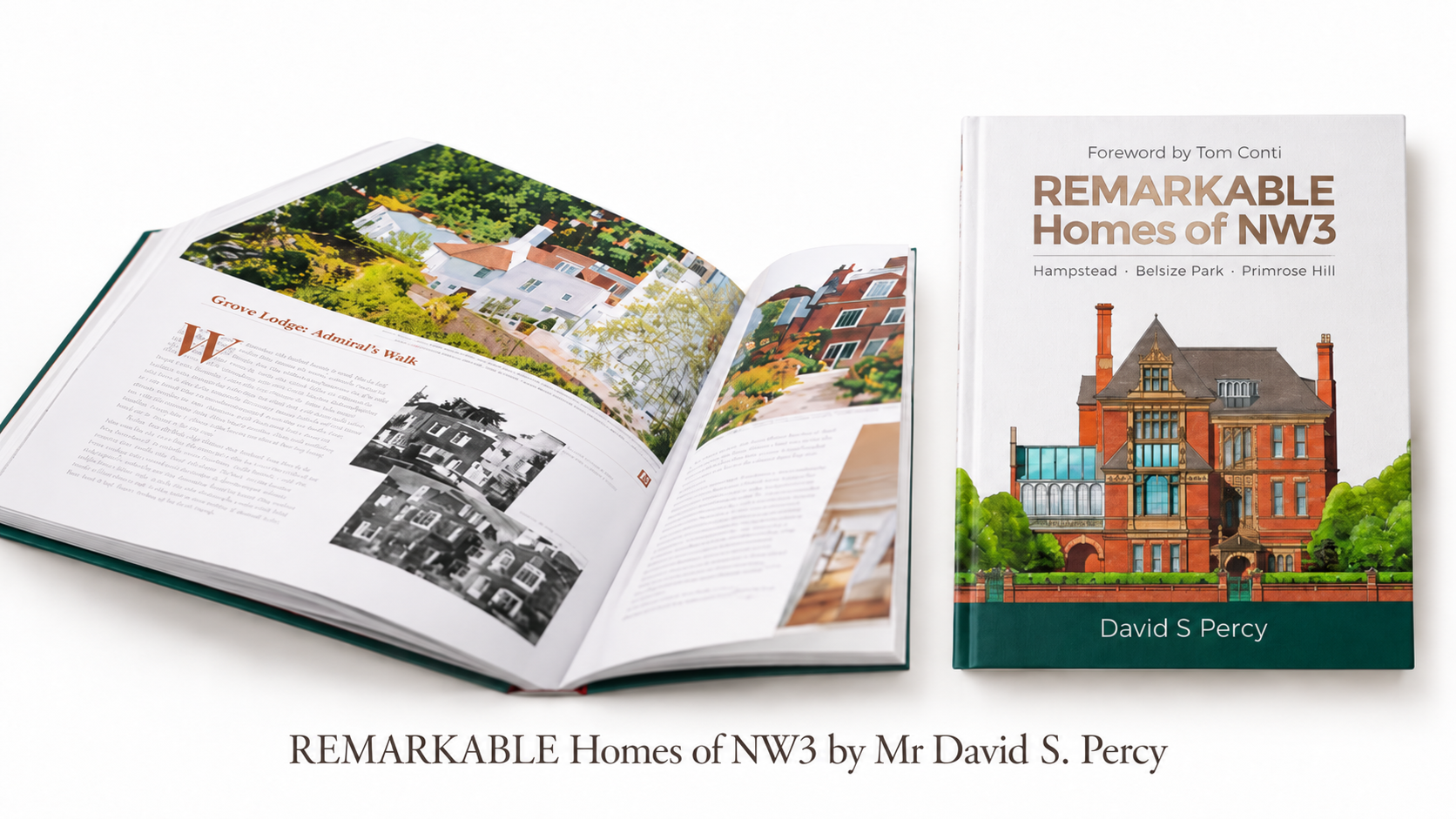
Few people have explored the visual and architectural identity of this part of London with quite the dedication of local filmmaker and photographer David S. Percy. His beautifully illustrated book, Remarkable Homes of NW3, explores one hundred distinctive houses across Hampstead, Belsize Park and Primrose Hill, bringing together architectural histories, interiors and the experiences of the people who live in them.
It is the kind of book that changes the way you walk through a familiar neighbourhood. A doorway becomes a clue. An unusual roofline invites investigation. A seemingly ordinary house might conceal an extraordinary interior or a connection with an important chapter in London’s cultural history. Percy’s documentary project, The Belsize Story, also offers a portrait of the area’s evolution through architecture, historical material and conversations with local people. His work complements that of local historians such as Averil Nottage, whose Exploring Belsize traces the area’s history through a series of walks, revealing stories of artists, refugees, cinemas and changing communities.
Together, these projects celebrate something easily overlooked: the importance of recording not only great buildings, but the ordinary domestic lives and personal histories that give them meaning.
Churches, spires and unexpected histories
Religious architecture provides some of NW3’s most memorable landmarks.St Peter’s Church, overlooking Belsize Square, has stood at the heart of the neighbourhood since 1859. It belongs to the period when the area’s grand Victorian streets were taking shape and a substantial church was considered an essential feature of a respectable new residential development. Further north, St Stephen’s on Rosslyn Hill is altogether more dramatic. Designed by Samuel Sanders Teulon and consecrated in 1869, the church is an extraordinary composition of Gothic forms, steep roofs, elaborate brickwork and a commanding tower. After years of decline, the Grade I listed building was rescued and restored, preserving one of the area’s most remarkable examples of Victorian ecclesiastical architecture.
Belsize Square Synagogue tells a different, equally important story. Its congregation was established in 1939 by Jewish refugees, principally from Germany, bringing to North West London a distinctive continental tradition of worship and music. The synagogue remains a living connection with the European communities who profoundly enriched the intellectual and cultural life of Hampstead and Belsize during the twentieth century.
Together, these buildings offer a reminder that the area’s history has been shaped not simply by wealth and architecture, but by migration, faith, resilience and changing communities.

Mrs Beechey: A village face immortalised in street art
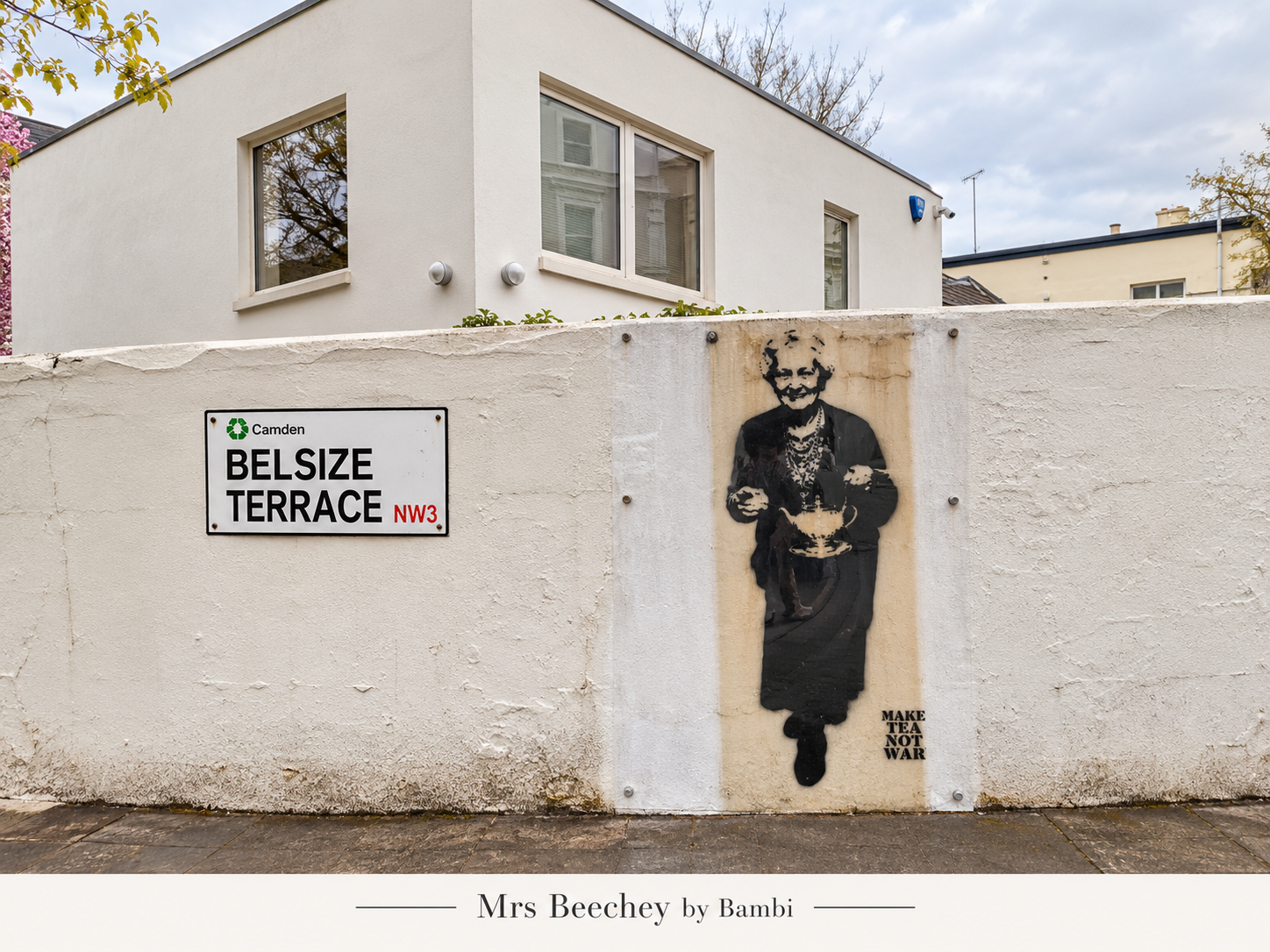
Not all of Belsize Park’s artistic treasures are hidden inside grand houses or celebrated galleries. In Belsize Village, an artwork by the street artist Bambi offers something rather different: a tribute to a local figure known as Mrs Beechey. Created in 2010, the portrait has become one of the village’s more unusual landmarks, a small piece of street art woven into the everyday life of the neighbourhood.
Unlike the anonymous portraits that often appear on city walls, this one has a particular local identity. It belongs to the history of a community rather than to the more transient world of fashionable street art. There is something rather touching about the story. In an area known for its celebrated writers, architects and artists, a familiar village figure has also found a place in its cultural landscape.
Art behind the garden walls: NW3’s independent galleries
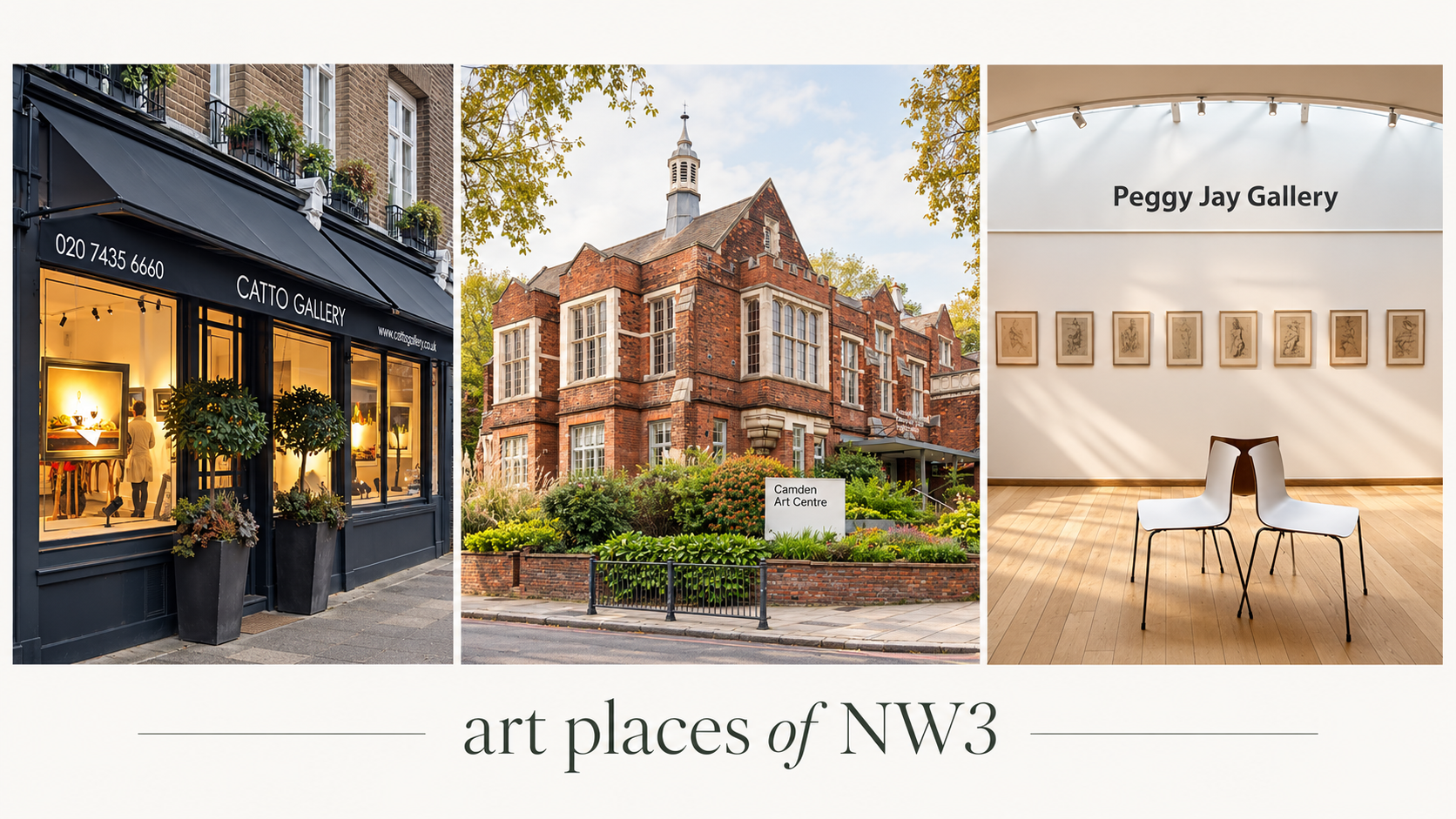
The artistic reputation of Hampstead and Belsize Park is not confined to its famous former residents. Art remains very much part of the neighbourhood’s everyday life, often found in unexpected places. At the northern edge of NW3, Camden Art Centre occupies a former Victorian library on Arkwright Road. Its understated exterior gives little indication of the ambitious contemporary art programme within.
International exhibitions, artist residencies, ceramics workshops and a peaceful garden make it one of North London’s most rewarding cultural spaces. There is something particularly appealing about a gallery where visitors can encounter challenging contemporary work and then linger over coffee away from the city.
On Heath Street, the Catto Gallery offers a rather different experience. Established for more than four decades, this independent gallery specialises in contemporary painting and sculpture, with an intimate downstairs exhibition space, Catto Below, devoted to additional work.
Then there is Burgh House, tucked away on New End Square, one of Hampstead’s most beautiful surviving Queen Anne houses. Built in 1704, it combines art exhibitions with a museum devoted to the area’s history. Its galleries celebrate the artists, writers and extraordinary characters who have made Hampstead their home. Perhaps the greatest pleasure of Burgh House, however, is the contrast between its formal Georgian architecture and the relaxed atmosphere of its café. On a warm afternoon, sitting outside with coffee after an exhibition, it is easy to forget that central London is only a few miles away.
These are not vast cultural institutions demanding an entire day’s attention. They are places to drop into, return to and slowly become familiar with, art woven into the ordinary rhythm of neighbourhood life.
After dark on New End: jazz beneath the Duke of Hamilton
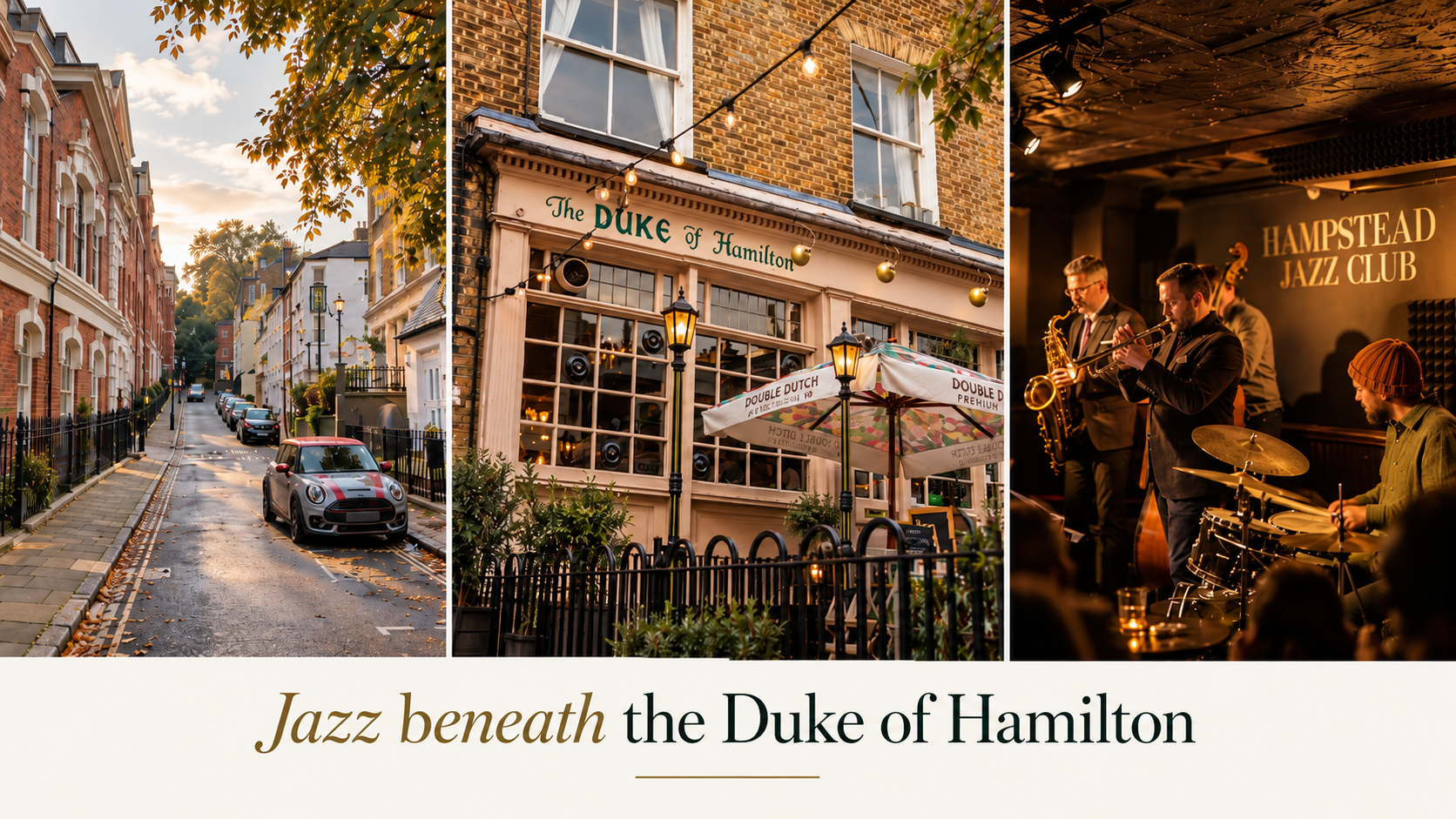
There are few better examples of Hampstead’s quietly eccentric cultural life than the Hampstead Jazz Club. Hidden in the cellar beneath the Duke of Hamilton pub on New End, the club feels like something discovered rather than advertised. Its intimate setting evokes an earlier era of London nightlife, when live music was enjoyed at close quarters and an evening out required little more than a good performance and somewhere to sit.
The pub itself has a wonderfully colourful history. During the 1960s, it was associated with a hard-drinking generation of British actors, including Peter O’Toole, Oliver Reed and Richard Burton. Today, the atmosphere is rather more civilised, but the spirit of artistic sociability remains. Since opening in 2018, Hampstead Jazz Club has attracted accomplished British and international musicians, presenting everything from intimate vocal performances to instrumental jazz and contemporary interpretations of the classics.
Its appeal lies partly in the scale. Rather than watching performers from a distant auditorium, audiences experience the music in a small room where every note, gesture and exchange between musicians becomes part of the evening. It is the sort of cultural experience that feels increasingly precious in London: personal, unpretentious and genuinely memorable.
A walk through Hampstead’s quiet streets, dinner in the village and a late evening of live jazz beneath an old pub, there are worse ways to spend a Thursday night. It says something rather lovely about NW3 that such an evening can unfold almost entirely within a few neighbouring streets.
The village within the city
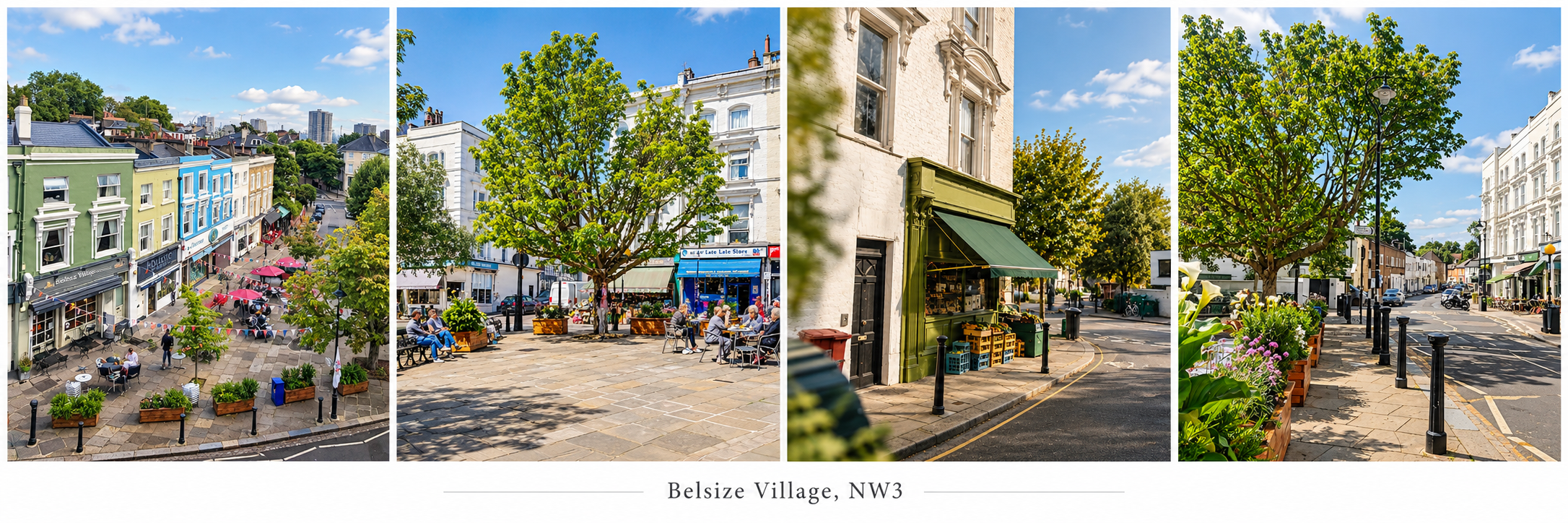
For all its architectural importance, Belsize Park is not a museum, its real appeal lies in the ordinary pleasures of daily life. Belsize Village, centred around Belsize Lane, has an atmosphere that seems increasingly rare in London: intimate, comfortably residential and slightly removed from the pace of the city. England’s Lane has a character of its own. Its independent shops, cafés and neighbourhood businesses give it the feeling of a small high street that belongs to the people who use it.
A morning coffee becomes a conversation. Familiar faces reappear at the same tables. Shopfronts change, but the rhythms of the neighbourhood remain recognisable.
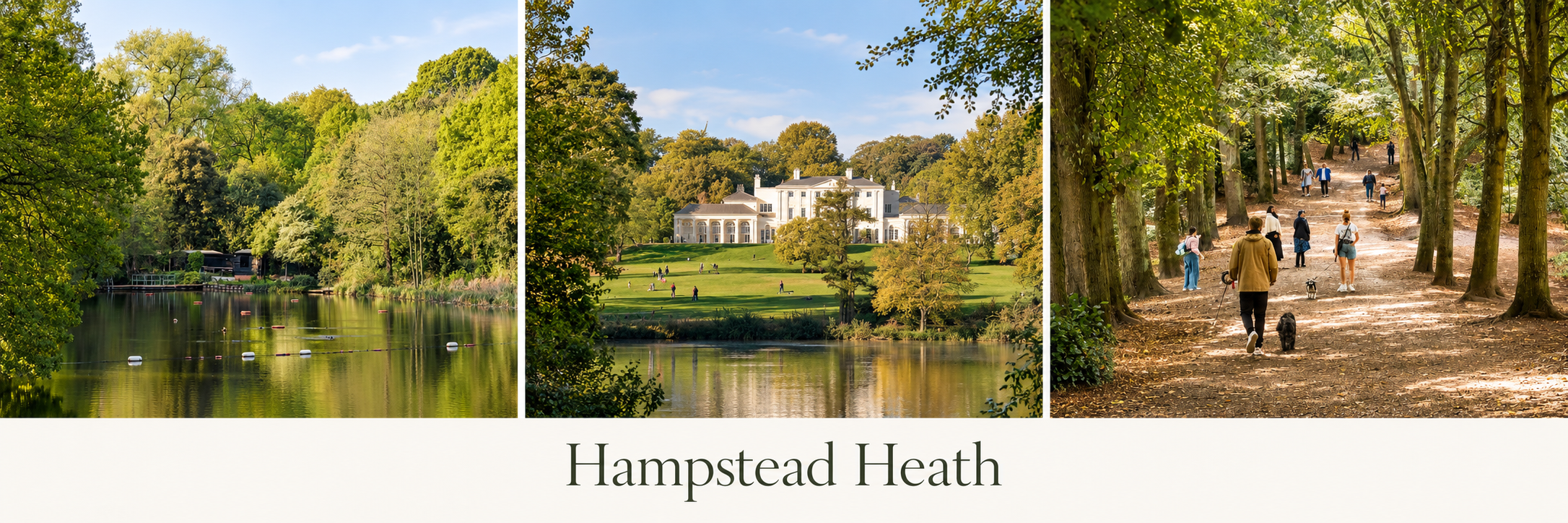
These are the details that rarely feature in architectural guidebooks but often matter most to the people who live here. The neighbourhood also enjoys an extraordinary relationship with green space. To the north, Hampstead Heath offers wild swimming, wooded paths, hidden gardens and expansive views across London. To the south, Primrose Hill provides one of the capital’s most celebrated panoramas, while the quieter residential streets between them retain a sense of privacy that can feel almost improbable in a major city.
The art of looking up
Perhaps the best way to understand Belsize Park is simply to walk without a particular destination. Notice the curved windows behind an Italianate villa, look for surviving Victorian shopfronts, unusual tiles, old boundary walls and the decorative ironwork that gives so many local houses their individual personalities. Take a detour down a mews. Follow a street you have never noticed before. Pause beside an unfamiliar building and wonder what it might once have been.
This is an area whose history is woven into its everyday surroundings.
The celebrated landmarks are worth seeking out, certainly. But so are the quieter discoveries: a beautifully proportioned staircase glimpsed through a doorway, a garden hidden behind high brick walls, an artist’s studio, or an architectural detail that has survived while the city around it has changed. Belsize Park has always attracted people who appreciate a certain combination of privacy, character, culture and individuality.
Perhaps that is why it remains so appealing. In a city constantly reinventing itself, this is a neighbourhood that has learned how to evolve without entirely losing sight of its past. Often, its most remarkable stories are still waiting to be discovered just around the corner.
For more than 30 years, Lexingtons has been helping people find their place in Hampstead, Belsize Park, Primrose Hill and the surrounding NW3 neighbourhoods. Our knowledge of these streets extends beyond their beautiful properties to the architecture, history and everyday life that make each one distinctive. Knowing an area means more than knowing its property market.